FACIAL TREATMENT GUIDE · 01
Compare facial treatment options
Facial treatment is an umbrella term. A hydrating facial and medical microneedling do not have the same purpose, risk or aftercare. Compare the goal, intensity, provider requirements and recovery before choosing.
Which options are usually non-invasive?
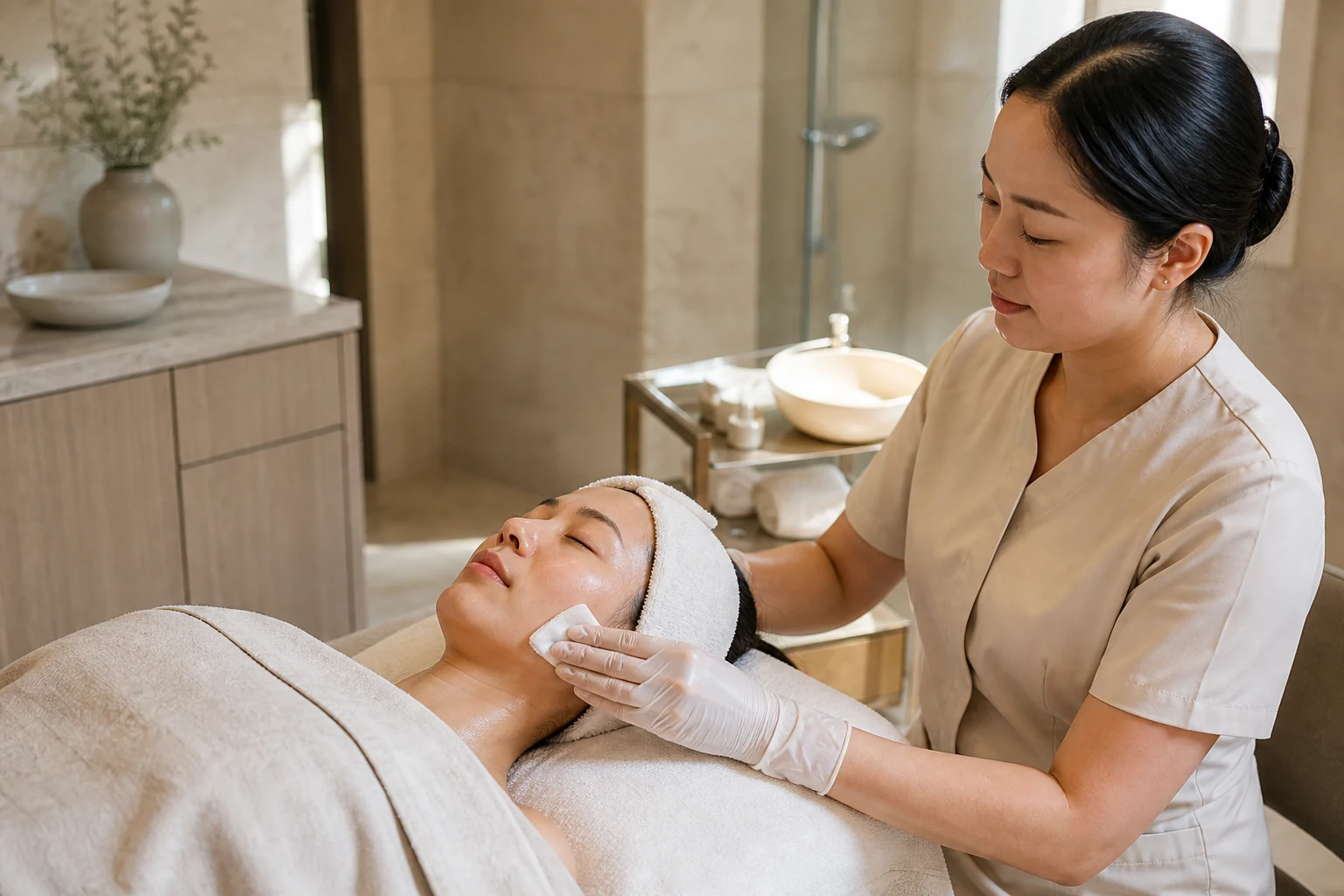
Hydrating and clarifying facials usually work at the skin surface. They may combine cleansing, mild exfoliation, hydration and selected extractions, but the plan should still change for sensitive, inflamed or recently treated skin.
Hydrating
Focuses on gentle cleansing, humectants and barrier-supporting products.
Clarifying
Targets surface oil and congestion without promising to cure acne.
Gentle exfoliation
Uses a measured surface exfoliant; strength and frequency should suit the skin.
Which options need extra screening?
Chemical peels, microneedling and energy-based devices can have meaningful benefits, but they can also cause burns, infection, scarring or pigment change when incorrectly selected or performed.
Superficial chemical peel
Ask about the acid, concentration, expected peeling, pigment risk and who is qualified to apply it.
LED light therapy
Ask about wavelength, intended use, eye protection and whether evidence applies to your concern.
Microneedling
Ask whether the device is authorized for the intended use and how infection control and aftercare are handled.
Radiofrequency microneedling
This combines needles with energy and carries different risks; FDA issued a safety communication about reports of serious complications.
How should you compare two recommendations?
Ask each provider to name the concern, explain why the modality fits, describe realistic improvement and downtime, identify contraindications and show how aftercare and complications are managed.
- Exact treatment, product and device
- Provider's training and licensed scope
- Number and spacing of sessions
- Expected discomfort, visible effects and downtime
- Alternatives, including doing less or postponing
- Total price and follow-up
FAQ
Common questions
Is a stronger facial always more effective?
No. More irritation can worsen barrier damage and increase pigment risk. The useful intensity is the lowest one likely to address the concern safely.
Can a facial cure acne?
A facial may help surface oil or congestion, but persistent or inflamed acne is a medical condition and may need assessment and treatment by a dermatologist.
FACIAL TREATMENT GUIDE
Continue the guide
FACIAL TREATMENT GUIDE
Understand your skin before choosing treatment.
Discuss the concern, current products, health history, alternatives and aftercare before deciding.